
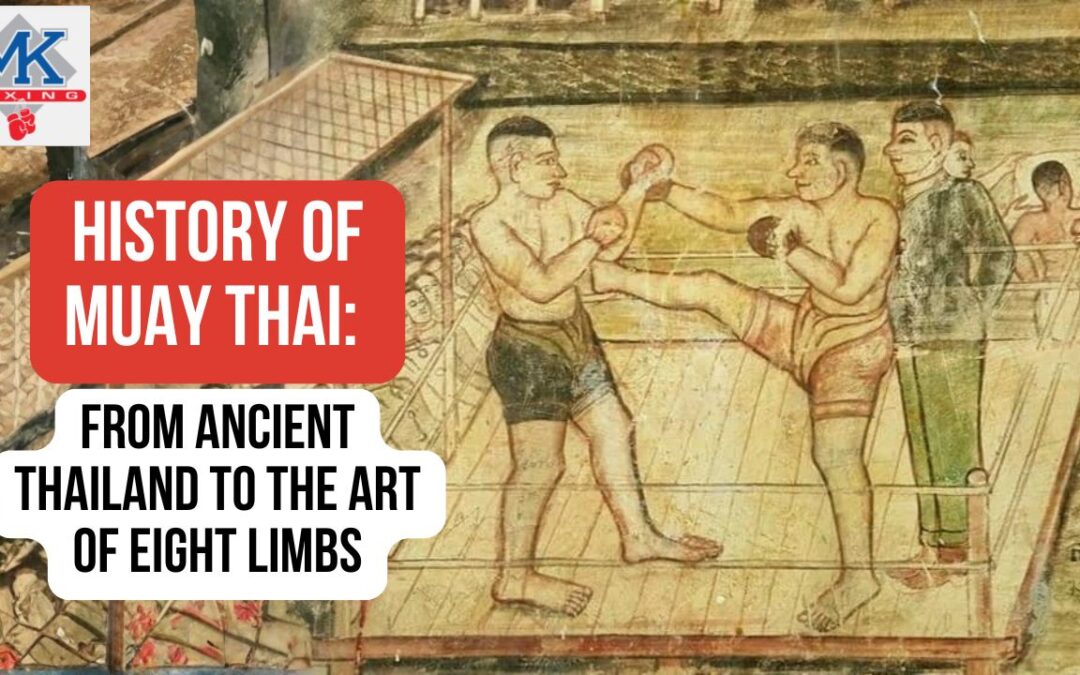
Known as the Art of Eight Limbs, Muay Thai is one of Thailand’s most recognizable martial traditions. Today, people around the world practice Muay Thai for competition, fitness, conditioning, self-defense skills and the challenge of mastering a highly technical striking art.
But Muay Thai didn’t begin in a modern gym or boxing ring.
Its story reaches back through centuries of Thai history, when fighting skills were connected to warfare, physical preparation and survival. Over time, those martial traditions developed into contests, a national sport and eventually the modern Muay Thai practiced around the world today.
So where did Muay Thai originate, and how did an ancient fighting tradition become the Art of Eight Limbs?
Where Did Muay Thai Originate?
Muay Thai originated in Thailand, historically known as Siam.
Pinpointing one exact moment when Muay Thai began is difficult. Its early history is intertwined with older Thai fighting traditions, military history, oral traditions and legends passed from one generation to another.
Long before standardized boxing rings, gloves and timed rounds, Thai warriors developed ways of using the body as a weapon when conventional weapons were lost or unavailable.
Fists, elbows, knees and legs could all become part of the fighting system.
Over generations, these skills were practiced not only for combat but also for physical training and competition.
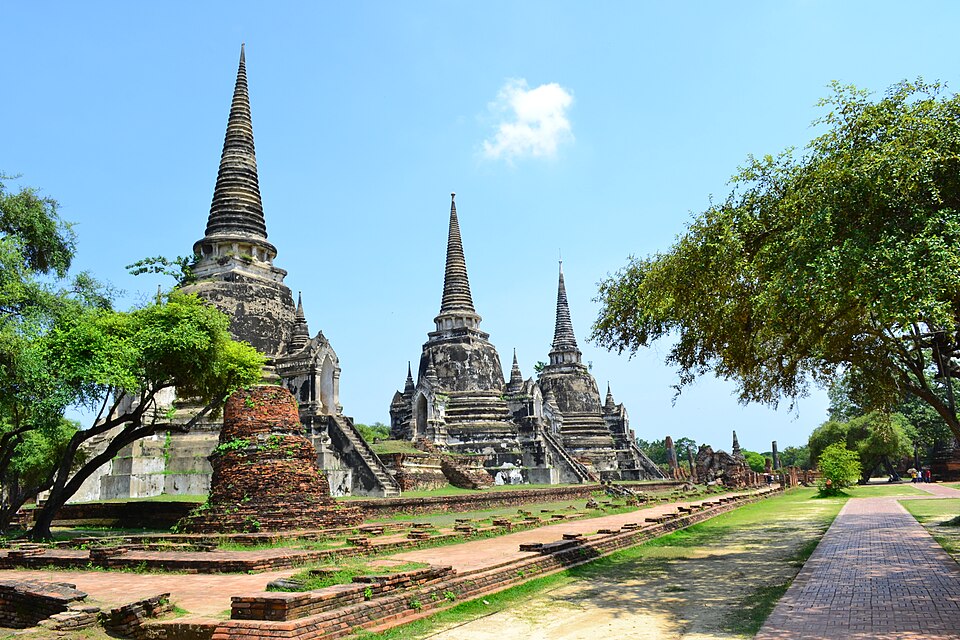
Sabyk2001 at English Wikipedia, CC BY-SA 4.0, via Wikimedia Commons

Wat Phra Sri Sanphet, Ayutthaya Historical Park, Thailand
Muay Thai During the Ayutthaya Period
The Ayutthaya Kingdom (1351–1767) holds an important place in the history and traditions surrounding Muay Thai.
One ruler particularly associated with Thai martial culture was King Naresuan the Great, who reigned near the end of the 16th century.
During the Ayutthaya era, martial training was closely connected with military preparedness. Fighting skills were valuable to soldiers, but unarmed contests also became a form of popular entertainment.
Thai boxing increasingly became part of life beyond the battlefield.
Fighters competed for prestige. Communities developed local champions. Contests attracted spectators, and skill in unarmed combat could earn a fighter considerable respect.
Muay was beginning to occupy several roles at once:
a martial skill, a physical discipline and a competitive sport.
From Ancient Fighting Arts to Muay Boran
You may have heard the term Muay Boran when reading about the history of Muay Thai.
Muay Boran literally refers to “ancient boxing” and is commonly used today as an umbrella term for traditional Thai unarmed fighting methods that predate the standardized modern sport.
These older systems were designed in a very different context from today’s regulated Muay Thai competition.
Traditional Thai martial culture also developed alongside armed fighting systems such as Krabi Krabong, which uses weapons including swords and staffs.
It is tempting to draw a simple historical line from one ancient fighting system directly into another, but the development of Thai martial arts took place over centuries and is not completely documented.
What is clear is that Thailand developed a rich martial tradition in which armed combat, unarmed striking, military training and competitive fighting all played important roles.
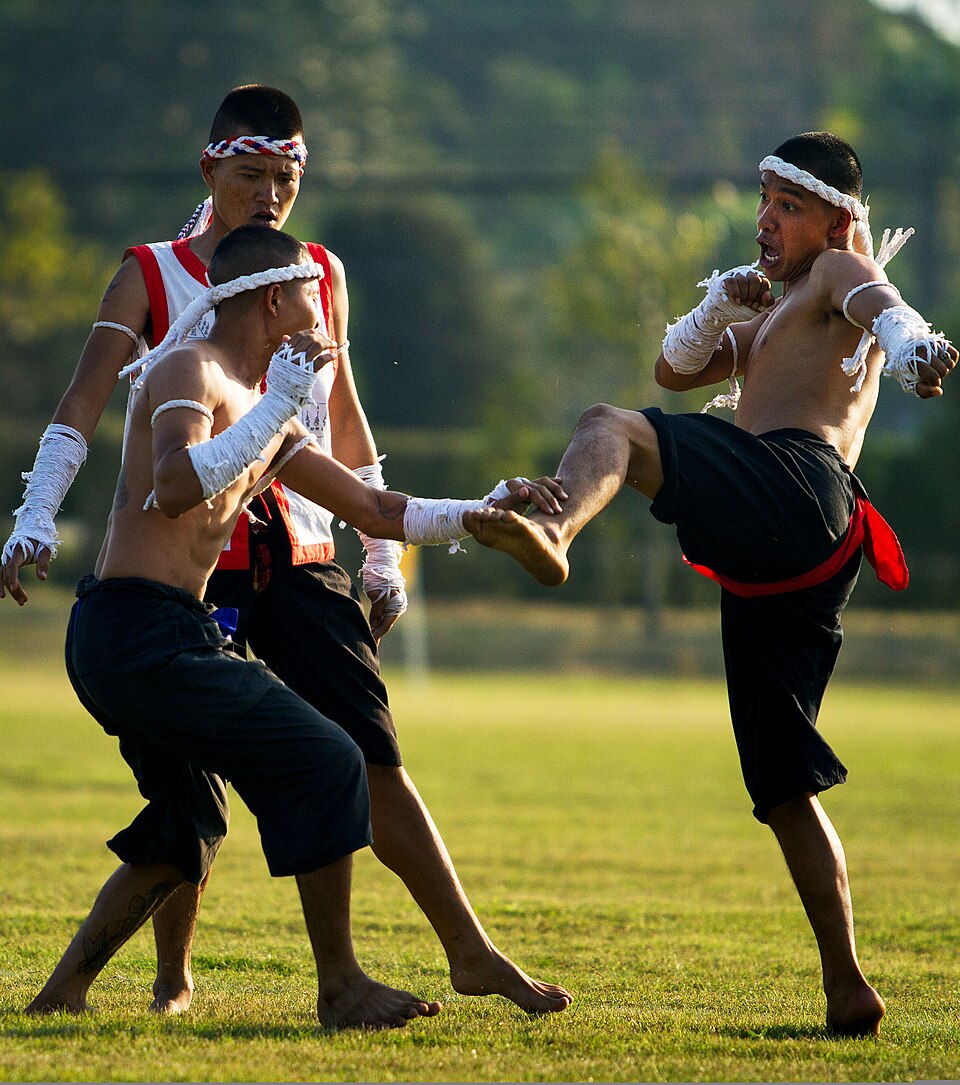
U.S. Marine Corps photo by Cpl. Tyler Main, Public domain, via Wikimedia Commons
.jpg)
How Muay Thai Became the “Art of Eight Limbs”
One characteristic makes Muay Thai immediately different from conventional Western boxing: the variety of striking tools available to the practitioner.
Muay Thai uses:
- Two fists
- Two elbows
- Two knees
- Two shins/legs
Together, these eight points of contact give Muay Thai its famous name:
The Art of Eight Limbs.
Western boxing primarily develops striking with the fists. Muay Thai trains the practitioner to integrate the upper and lower body into a broader striking system.
Punches can flow into kicks.
Kicks can be followed by punches.
Knees and elbows add close-range possibilities.
Footwork, defense, balance, timing and clinch work add still more technical depth.
This combination is one reason Muay Thai continues to challenge practitioners even after years of training.
The Legend of Nai Khanom Tom
One of the most famous names in Muay Thai history is Nai Khanom Tom.
His story comes from the period following the fall of Ayutthaya to Burmese forces in 1767.
According to Thai martial tradition, Nai Khanom Tom was among the Siamese prisoners taken by the Burmese.
The famous story tells that in 1774 he was selected to demonstrate Siamese fighting against a Burmese opponent.
Before the contest, Nai Khanom Tom performed a ritual dance to honor his teachers and traditions.
He then defeated his opponent.
Later versions of the story tell of Nai Khanom Tom continuing to fight and defeat several additional Burmese challengers. Impressed by his extraordinary skill, the Burmese king is said to have granted him his freedom.
Like many stories that have survived for centuries, the details surrounding Nai Khanom Tom vary between accounts and contain elements of legend.
But his cultural significance is undeniable.
Nai Khanom Tom became a symbol of skill, courage, perseverance and Thai martial pride—and his name remains closely associated with Muay Thai today.
March 17: Nai Khanom Tom Day
Every year on March 17, Muay Thai practitioners honor the legacy of Nai Khanom Tom.
The date is recognized throughout the international Muay Thai community as Nai Khanom Tom Day.
Celebrations have traditionally taken place in Ayutthaya, Thailand’s historic former capital, bringing together Muay Thai practitioners from Thailand and around the world.
The occasion is not simply about celebrating fighting.
It is also about honoring Muay Thai’s teachers, masters and generations of practitioners who preserved and passed down the art.
That respect for teachers remains an important part of Muay Thai culture today.
- Coordination and balance
- Striking technique
- Mental focus
- Confidence
- Self-defense skills
- Stress relief
- Personal challenge
That versatility is part of what has allowed Muay Thai to move successfully from the battlefields and fighting traditions of ancient Siam into modern gyms around the world.
The context has changed.
The desire to learn, improve and test yourself has not.
Wai Kru: Honoring the Teacher
One of the clearest examples is the Wai Kru.
“Wai” refers to a traditional Thai gesture of respect, while kru means teacher.
Before traditional Muay Thai competition, fighters perform ceremonial movements associated with the Wai Kru and Ram Muay.
The ritual pays respect to teachers, family, the fighter’s gym or camp, and the traditions that made the fighter’s knowledge possible.
It expresses an idea at the heart of many martial arts:
Nobody learns alone.
Every technique has been taught, practiced, corrected and eventually passed to another generation.
How Ancient Muay Became Modern Muay Thai
The Muay Thai practiced today is not identical to the fighting contests of centuries ago.
The sport gradually became more organized and regulated.
Modern boxing rings were adopted. Timed rounds and weight divisions became part of competition. Rules became standardized, and boxing gloves replaced older forms of hand wrapping in regulated bouts.
These changes helped transform traditional fighting contests into a modern combat sport while preserving Muay Thai’s distinctive striking techniques and cultural identity.
During the 20th century, Muay Thai also began reaching audiences far beyond Thailand.
International fighters traveled to Thailand to train. Thai fighters competed abroad. Elements of Muay Thai influenced other striking sports, kickboxing and eventually modern mixed martial arts.
Today, Muay Thai is practiced around the world while remaining deeply connected to Thailand.
Muay Thai Today: More Than Competition
Professional fighters remain an important part of Muay Thai.
But you don’t need any intention of stepping into a ring to train in the Art of Eight Limbs.
Modern students practice Muay Thai for many reasons:
- Full-body conditioning
- Cardiovascular fitness
- Strength and endurance
- Coordination and balance
- Striking technique
- Mental focus
- Confidence
- Self-defense skills
- Stress relief
- Personal challenge
That versatility is part of what has allowed Muay Thai to move successfully from the battlefields and fighting traditions of ancient Siam into modern gyms around the world.
The context has changed.
The desire to learn, improve and test yourself has not.
A Living Thai Martial Tradition
Muay Thai isn’t simply an old fighting system preserved in history books.
It continues to evolve.
New generations learn from coaches and experienced practitioners. Fighters continue to compete. Students who may never enter a ring continue to discover the physical and mental challenge of the art.
Its cultural significance also continues to receive international attention. Thailand has put forward “Muay Thai: Thai traditional boxing” within UNESCO’s intangible cultural heritage process.
From ancient martial traditions to today’s training camps and gyms, Muay Thai has survived because people continue to practice it.
And perhaps that’s the most interesting part of its history:
The story isn’t finished.
Explore More About Muay Thai
Want to go deeper into the traditions, techniques and benefits of the Art of Eight Limbs?
Discover more interesting facts, traditions and stories surrounding Muay Thai.
Brilliant Form of Self-Defense – Muay Thai →
Learn more about Muay Thai’s striking techniques and why the art has become popular for practical martial arts training.
Experience Muay Thai at MK Boxing
Learning the history of Muay Thai gives you an appreciation for where the Art of Eight Limbs came from.
Training gives you an entirely different understanding of it.
At MK Boxing in Billerica, MA, our Muay Thai classes combine authentic striking techniques with full-body conditioning and technical progression.
You don’t need previous martial arts experience—and you don’t need to want to become a fighter.
Start with the fundamentals. Learn punches, kicks, knees and elbows. Work the pads. Improve your conditioning. And see where the art takes you.
Explore Muay Thai Classes at MK Boxing →
Try Your First Class for $10 →
Centuries of tradition. Your first class starts today.
TAGS: Muay Thai history | origin of Muay Thai | where did Muay Thai originate | Muay Thai Thailand | Muay Boran | Art of Eight Limbs | Nai Khanom Tom | Nai Khanom Tom Day